Showing posts with label liver disease. Show all posts

Saturday, August 15, 2026

The cancer symptoms people mistake for ageing or stress

From telegraph.co.uk

By Mary Comber

From persistent fatigue to a change in bowel habits, one doctor and cancer survivor reveals the red flags we should never ignore 

“Nobody wants to think they’ll be affected by cancer,” says Dr Anisha Patel, GP. “Many people dismiss cancer symptoms as stress or ageing, or worry they’re wasting my time. Some have waited for months before coming to see me.”

Dr Patel, author of Everything You Hoped You’d Never Need to Know About Bowel Cancer, understands that instinct only too well. In 2018, she was diagnosed with stage-3 bowel cancer after a few months of subtle symptoms.

“Even with my medical knowledge, I could explain everything away,” she says. “I blamed constipation and tiredness on being a busy mum and GP. It was only when the symptoms became more persistent I realised I needed help.”

She’s far from alone. According to Cancer Research UK, around one in three people delay contacting their GP for six months after noticing a potential cancer symptom. That delay can have serious consequences. A study in The British Medical Journal found each four-week delay in intervention was associated with a 6 to 13 per cent increase in the risk of death, with the risk rising the longer treatment was delayed.

“A later diagnosis often means the cancer has had more time to grow or spread,” says Dr Patel. “That often leads to more intensive treatment and a worse prognosis.”

Dr Anisha Patel was diagnosed with stage-3 bowel cancer in 2018, after blaming her constipation and tiredness on being a busy mum and GP Credit: Clara Molden


Following surgery and chemotherapy, Dr Patel made a full recovery and now works with Bowel Cancer UK to encourage more people to recognise the warning signs.

Here are the symptoms she says should never be ignored.

1. You’re more tired than usual

“Fatigue is a difficult symptom to catch because it’s so common,” says Dr Patel. “What’s key is whether it feels disproportionate to your activity level and distinctly different from your normal level of tiredness.”

Persistent fatigue can be a sign of many cancers but particularly bowel, kidney and blood cancers such as leukaemia and lymphoma.

As cancer cells grow, they consume more energy and nutrients which can leave the body depleted. Blood cancers and gastrointestinal cancers that cause slow, internal bleeding can lead to anaemia, resulting in weakness and fatigue.

Shortly before her diagnosis, Dr Patel was on holiday in Italy when she noticed she couldn’t manage her usual morning run. “I kept needing siestas and assumed it was because of the heat,” she says. “In reality, I was becoming increasingly anaemic because the bleeding was getting worse. I was relaxed, eating and sleeping well but the fatigue was pervasive.”

What to do

Book an appointment to see the GP if your fatigue lasts more than six weeks, is getting worse or significantly affecting everyday life, despite adequate rest, advises Dr Patel.

“It’s particularly important to seek help if fatigue is accompanied by another red-flag symptom, such as unexplained weight loss, bleeding, a lump or persistent pain,” she adds. “Don’t simply assume persistent tiredness is part of getting older.”

Your GP should check for anaemia and nutritional deficiencies, says Dr Patel. “They may also check thyroid function, diabetes and whether fatigue is caused by medication, an autoimmune condition or other illness,” she adds. “There may be an obvious explanation but, if it’s out of the ordinary, it needs investigating.”

2. Your bowel habits have changed

Whether it’s stress, anxiety or simply getting older, most of us experience changes in our bowel habits from time to time. Yet “people should never diagnose themselves with IBS (Irritable Bowel Syndrome) or assume it’s just stress affecting their bowels,” says Dr Patel. “We first need to rule out medical conditions including bowel cancer.”

A change in bowel habits doesn’t just mean diarrhoea or constipation. “Some people alternate between the two, the need to open their bowels more frequently or feel as though they’ve not emptied them properly,” says Dr Patel. “The shape of the stool can also change – mine became thin and ribbon-like because my tumour was in my rectum, narrowing the passage. I also had pain and a spasming sensation in my bottom.”

Other warning signs include abdominal pain and blood in the stool. “Shortly before my diagnosis, I began waking in the night with a sudden need to open my bowels,” adds Dr Patel. “That’s another red flag.”

What to do

If changes in bowel habits last more than three weeks or keep coming back, see your doctor.

“If a symptom clears up within a week or two, it’s less likely to be concerning,” says Dr Patel. “However, symptoms that persist or are clearly different from usual should always be checked.”

Around nine in 10 people with bowel cancer survive five years or more when diagnosed at the earliest stage, according to Bowel Cancer UK. At the latest stage, this falls to one in 10.

3. You’ve lost weight without trying

“Loss of appetite often goes hand in hand with unexplained weight loss, but either symptom can occur on its own,” says Dr Patel. “Unexplained weight loss is particularly associated with cancers of the digestive system, including bowel cancer, but can also occur with lung, liver, kidney and blood cancers.”

Cancer can trigger weight loss for several reasons. “Some cancers suppress appetite while others cause difficulty swallowing or nausea,” says Dr Patel. “Cancers affecting the digestive system may affect digestion and nutrient absorption while others trigger inflammatory changes that alter the body’s metabolism.”

What to do

Never ignore unexplained weight loss. If you’re not deliberately trying to lose weight, loss of appetite and weight need investigating, says Dr Patel.

“There are many non-cancer causes, including an overactive thyroid, diabetes, digestive disorders and certain medications,” she explains. “However, persistent, unexplained weight loss should always be checked, particularly if accompanied by other symptoms such as abdominal pain, bloating and problems swallowing.”

Weighing scales
Unexplained weight loss should always be checked, particularly if accompanied by abdominal pain, bloating and problems swallowing Credit: Moment RF

4. Your back pain won’t go away

“For me, the red flags are new back pain in someone over 50 who’s never had it before,” says Dr Patel. “The risk of cancer and other serious conditions increases with age so any new, persistent pain becomes more clinically significant.”

The type of pain is also key. “Muscle pain is usually related to movement,” she says. “You might have been digging in the garden or lifting something heavy and it hurts when you bend, twist or stand up. Cancer-related back pain is more likely to be constant whether you move or not.”

Backache is particularly concerning if combined with other symptoms such as a cough, changes in bowel habits or breast symptoms such as lumps or swelling. “Breast, prostate, lung, kidney and thyroid cancers, as well as myeloma, can all spread to the bones,” says Dr Patel.

What to do

Seek medical advice if you’re over 50 and start experiencing persistent back pain for the first time – especially if it’s not affected by movement and gets worse at night.

“Night pain is another important red flag,” says Dr Patel. “If your back pain is waking you up at night, it’s something to investigate.”

5. You’re feeling bloated

Ordinary bloating comes and goes,” says Dr Patel. “If it doesn’t settle and feels like your tummy is getting bigger, that’s more concerning – particularly if accompanied by pelvic pain, feeling full more quickly or loss of appetite.”

Bloating that doesn’t go away can sometimes be an early warning sign of ovarian, bowel, liver, pancreatic or womb cancer.

Cancer-related bloating can be caused by a tumour pressing on nearby organs or by fluid building up in the belly (the medical term for this is ascites).

“You may notice you’re eating less because you feel full more quickly, need to urinate more often or see changes in your bowel habits,” says Dr Patel.

What to do

Arrange a GP appointment if bloating persists for more than three weeks, is getting worse or keeps coming back.

“It could be caused by IBS, coeliac disease or another non-cancer condition but it’s paramount we rule out ovarian and other cancers,” says Dr Patel. “These cancers are often diagnosed late because they start with non-specific symptoms.”

Your doctor may arrange blood tests and, depending on your symptoms, further investigations or referral to a specialist.

“The important thing is to know what’s normal for you,” says Dr Patel. “If something changes and doesn’t feel right, don’t keep putting it down to stress or getting older. Get it checked.”

https://www.telegraph.co.uk/health-fitness/conditions/cancer/five-cancer-symptoms-people-mistake-for-ageing-or-stress/

Monday, July 27, 2026

8 health benefits of turmeric and how to add it to your diet

From restless.co.uk 

Turmeric, sometimes called golden spice or Indian saffron, is a plant native to Asia and Central America. It’s part of the ginger family and is the main ingredient in curry powder. Turmeric is available in various forms, including teas, powders, and extracts.

The main active ingredient, curcumin, has antioxidant and anti-inflammatory properties and has been linked with a range of impressive health benefits – from pain relief to improved mood and longevity.

But what does the research say? Does this yellow-coloured spice do more than add flavour to meals?

Here are eight health benefits of turmeric, plus ideas on how to add it to your diet.

Note: While initial trials have been promising, further research is needed to confirm the potential health benefits of turmeric.

1. Turmeric has antioxidant and anti-inflammatory properties

A key reason turmeric is increasingly being explored for its health benefits is because of its main active ingredient, curcumin, which has antioxidant and anti-inflammatory properties.

We need a certain amount of inflammation in the body to stay healthy – for example, to fight viruses and bacteria, and recover from injury. However, long-term chronic inflammation is a driving factor behind various health conditions – including cancer, arthritis, and heart disease – so keeping it under control is a great way to boost health.

Curcumin has been found to prevent inflammation, as its antioxidant effects help cleanse the body of free radicals (unstable molecules). Some studies have gone even further, suggesting that curcumin may enhance the action of other antioxidants.

2. Turmeric may reduce the risk of certain cancers

Several studies have explored curcumin’s effect on cancer cells, concluding that it may have anti-cancer effects. This includes the ability to kill cancer cells and prevent more from developing. There’s also evidence that it may limit the negative effects of chemotherapy.

In this study, curcumin was found to lower ERG protein levels, which is recognised as a key indicator of prostate cancer. Another study looked at the effects of combining curcumin and chemotherapy as treatment for bowel cancer and confirmed that this treatment may be better than chemotherapy alone.

Other research has looked into the effects of curcumin on mucositis during cancer treatment. Mucositis causes a sore mouth and is a common side effect in people with head or neck cancer who are receiving chemotherapy or radiotherapy. In this study, when given topically as a gel or mouthwash, curcumin was found to delay the development of mucositis and reduce pain. It also appeared to speed up wound healing.

3. Turmeric may offer pain relief for people with arthritis

There are various forms of arthritis, including osteoarthritis and rheumatoid arthritis, both of which are linked with joint inflammation.

Researchers concluded that curcumin may reduce inflammation in people with rheumatoid arthritis. Another study found that curcumin was more effective at relieving osteoarthritis pain than a placebo.

Some research has even likened the anti-inflammatory effects of curcumin to those of non-steroidal anti-inflammatory drugs (NSAIDs), such as ibuprofen. For example, participants in this study reported that curcumin found in turmeric worked as well as ibuprofen for knee arthritis pain.

4. Turmeric may boost brain health and reduce the risk of Alzheimer’s disease

Dementia is another disease associated with inflammation, and researchers are recognising that curcumin’s antioxidant and anti-inflammatory properties may help prevent cognitive decline.

For example, this study noted that curcumin may help maintain normal brain structure and, therefore, act as an effective source of prevention and treatment for Alzheimer’s disease.

Another study found that taking 90mg of curcumin twice a day for 18 months improved memory performance in adults with dementia. And other research has found that, alongside fighting inflammation, curcumin may help prevent protein plaque build-up in the brain, a characteristic of Alzheimer’s disease.

5. Turmeric may reduce the risk of heart disease

Research suggests curcumin may boost heart health and protect against heart disease and heart attacks.

This study of people who had coronary artery bypass surgery found that those who took four grams of curcumin a day for a few days before and after surgery had a 65% lower risk of having a heart attack in the hospital.

There are several reasons why turmeric may benefit heart health. Some studies have found that it may improve endothelial (blood vessel lining) function. Endothelial dysfunction occurs when blood vessels can’t regulate factors such as blood clotting and blood pressure, and is a major contributor to heart disease.

Studies, such as this one, have also suggested that curcumin may lower cholesterol levels, though further research is needed to confirm this.

Lastly, it’s worth noting curcumin’s ability to reduce inflammation and oxidative stress, both of which are known to play a role in the development of heart disease.

Note: The British Heart Foundation currently says that there’s no strong evidence to support the claims that turmeric supplements are good for your heart, with studies small and findings varied. More clinical trials are needed to investigate whether turmeric can boost heart health.

If you’re taking anticoagulants (blood thinners), it’s important to speak to your doctor before adding turmeric supplements to your diet. High doses of turmeric may have a blood-thinning effect, which could be dangerous if taken alongside anticoagulants.

6. Turmeric may boost mood and reduce the risk of depression

There’s mounting evidence that turmeric may offer antidepressant benefits and be an effective treatment for depression and other mood disorders.

Like many other conditions on this list, most of these effects are thought to come from curcumin’s ability to reduce inflammation. But, research also suggests that curcumin may improve brain plasticity and increase the production of neurotransmitters serotonin and dopamine, which play a key role in mood regulation.

We also know from research that people with depression tend to have lower levels of brain-derived neurotrophic factor (BDNF), as well as a smaller hippocampus, both of which are key for learning and memory. Significantly, the results of this study suggest that curcumin may boost BDNF levels and help reverse some of these effects.

7. Turmeric may improve liver function

Non-alcoholic fatty liver disease (NAFLD) is a term used to describe a range of conditions caused by a build-up of fat in the liver.

Mild NAFLD isn’t usually harmful, but it can lead to more serious liver damage, including cirrhosis (scarring of the liver that can cause liver failure) if it progresses. Having high amounts of fat in your liver is also associated with an increased risk of other health problems, including diabetes, high blood pressure, and kidney disease.

Some research suggests that curcumin may help treat NAFLD by reducing inflammation. In this study, people with NAFLD consumed either two grams of turmeric or a placebo every day for eight weeks. Liver enzymes (which tend to increase with NAFLD) dropped substantially in those who took turmeric.

Note: While initial findings are promising, further research is needed to confirm turmeric’s potential role in treating NAFLD. Either way, turmeric shouldn’t be viewed as a substitute for standard NAFLD treatments.

It’s also important to check with your doctor before adding turmeric supplements to your diet. Because they can increase bile production, they may be dangerous for people with liver or bile duct problems.

8. Turmeric may boost gut health and improve symptoms of gastrointestinal disorders

Turmeric may improve digestion and reduce the risk of gastrointestinal conditions. Specifically, turmeric has been found to boost the strength and diversity of the gut microbiome (the collection of bacteria and other microbes in your gut). In this study, when participants took curcumin for eight weeks, the diversity of their gut microbiome increased by 69%, while the placebo group’s decreased by 15%.

This is significant as gut microbiome imbalances have been linked with an increased risk of gastrointestinal conditions, such as irritable bowel syndrome (IBS) and inflammatory bowel disease (IBD).

Other research suggests that curcumin may help strengthen gut barrier function (which is responsible for letting nutrients into the gut while keeping harmful microbes out). A weakened barrier is linked with inflammation and an increased risk of conditions like IBS, coeliac disease, and colon cancer.

For these reasons, turmeric is currently being considered as a potential treatment for conditions like IBS. In this study of patients with ulcerative colitis, those who took two grams of curcumin a day alongside prescription medication were more likely to remain in remission than those who took medication alone. However, as stated in this more recent review, further research is needed to fully understand curcumin’s effect on the disease.

How can I add turmeric to my diet, and should I take a supplement?

How can I add turmeric to my diet and should I take a supplement

Because further research is needed to confirm turmeric’s effect on health, experts have yet to agree on a recommended daily intake.

However, to reap the health benefits, a good place to start is by adding turmeric to your meals throughout the week. For example, you could mix it into a smoothie or tea, or add it as a seasoning to soups and vegetable dishes. Check out these 15 ways to eat turmeric from Nature Made for more inspiration.

Experts suggest that one of the most beneficial ways to add turmeric to your diet is to use it in place of seasonings like salt, which can increase inflammation. It’s also thought that cooking turmeric with healthy fats like avocado and olive oil may improve curcumin absorption and boost its anti-inflammatory effects.

Turmeric supplements are also safe for most people. However, it’s important to note that these contain high doses of curcumin, which can increase the risk of side effects, such as stomach pain. As a result, it’s generally better to try adding turmeric to your diet first.

Turmeric supplements may not be suitable for some people, such as those taking blood-thinning or diabetes medication, or those with liver problems. For this reason, it’s important to always contact your GP before adding new supplements to your diet.

Final thoughts…

The antioxidant and anti-inflammatory properties of turmeric are impressive. So, when considering its potential impact on health, it’s worth thinking about adding this golden spice to your diet.

For further reading, head to our diet and nutrition section. Here, you’ll find information on everything from heart and joint health to ways to regulate blood sugar.

https://restless.co.uk/health/healthy-body/health-benefits-of-turmeric-and-how-to-add-it-to-your-diet/?utm_source=trigger&utm_medium=email&utm_campaign=eml_trig_healthy_body_retarget_v2&utm_content=eml_trig_eng_healthy_body_retarget_commercial_order_25-09-16_test

Friday, July 17, 2026

Liver Disease: Symptoms, Causes and Treatment

From my.clevelandclinic.org

Liver disease includes many conditions that can damage your liver and affect how it works. Some are mild, while others can be serious or long-lasting. Because your liver plays such an important role in your body, damage can affect your overall health. Knowing what to watch for and getting early care can make a big difference 

What Is Liver Disease?

“Liver disease” is a broad term for any condition that damages your liver and affects how it works. Some of the conditions are common, while others aren’t. They can all range from mild to life-threatening. Some types develop slowly over time, while others happen more quickly.

Your liver plays an important role in your body. It helps clean your blood, process nutrients and fight off infections. When it’s damaged, it can’t perform these jobs well. Over time, liver disease can lead to severe scarring, liver cancer, liver failure and the need for a new liver (liver transplantation).

You can treat and even reverse some liver diseases, especially if you find them early. Others are long-term conditions (chronic liver disease) that need ongoing care. Treatment depends on the type and how much damage there is.

Stages of liver disease

Many liver diseases follow a similar pattern as damage builds over time. The stages of liver disease are:

  1. Hepatitis: Hepatitis is swelling and irritation (inflammation) in your liver tissues. This is how your liver responds when you have an injury or infection.
  2. Fibrosis: Fibrosis is when scar tissue begins to form due to the ongoing inflammation. Scar tissue replaces healthy cells, which makes your liver work harder.
  3. Cirrhosis: Cirrhosis is severe, permanent scarring that affects your liver function. At this point, the condition is usually permanent. But with early treatment and changes to daily habits, some cases can be reversed.
  4. End-stage liver disease: Also called liver failure, this is the stage when your liver can no longer function properly for your body’s needs.

Not everyone moves through all these stages. But many people are living with chronic liver disease.

Symptoms and Causes

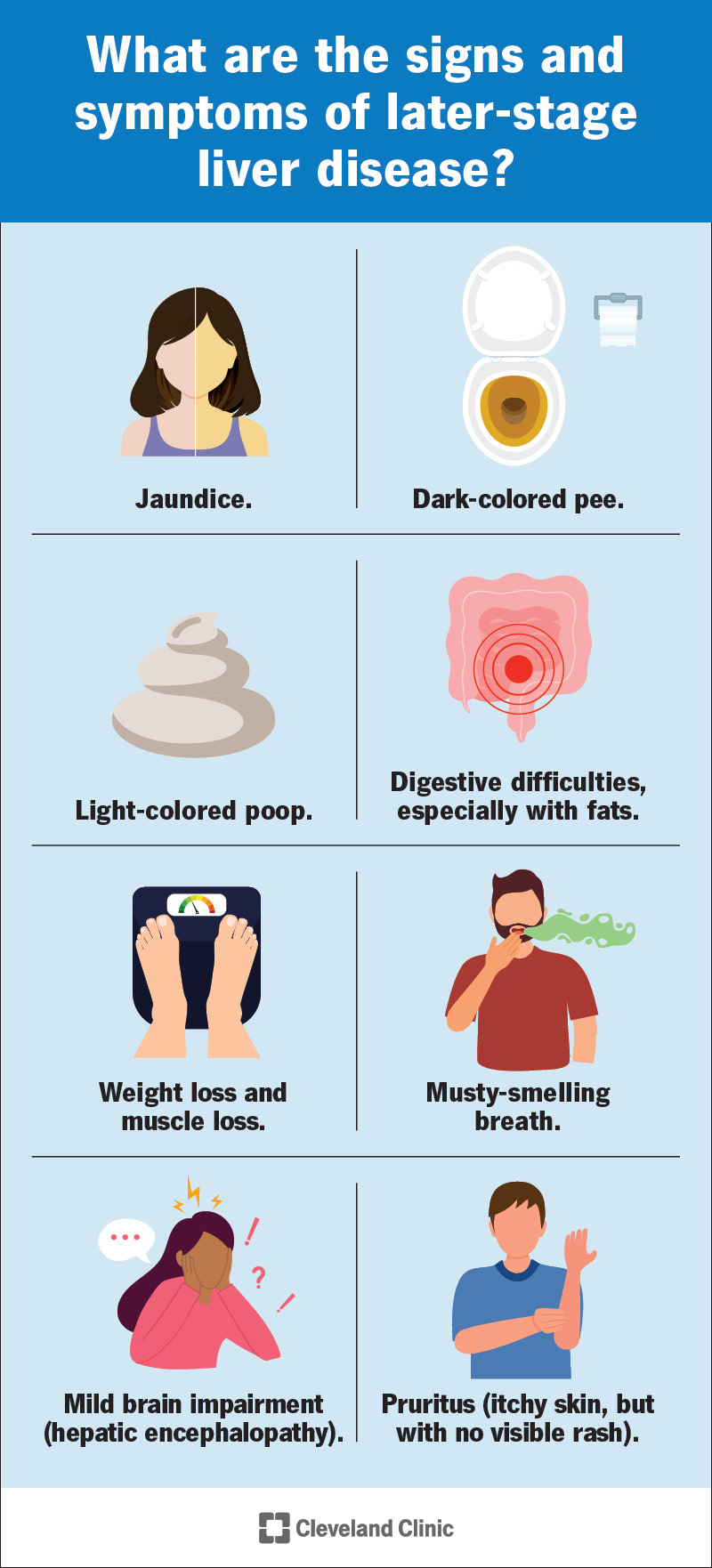
Later-stage signs and symptoms of liver disease, including jaundice, dark-colored pee and light-colored poop
Liver disease doesn’t always cause symptoms in its early stages. Advanced, later-stage signs of the disease may include jaundice, dark-coloured pee and light-coloured poop

Liver disease symptoms

Liver disease doesn’t always cause symptoms in its early stages. Advanced, later-stage signs of liver disease may include:

What causes liver disease?

There are many types of liver disease. Each type has its own causes. Some of the most common causes include:

Risk factors

You may be more likely to develop liver disease if you:

  • Have obesity or Type 2 diabetes
  • Drink alcohol regularly or heavily
  • Have a history of hepatitis
  • Take certain medications long term
  • Have a biological family history of liver disease

Complications of this condition

If liver disease gets worse, it can lead to:

  • Cholestasis
  • Jaundice
  • Fluid build-up in your belly (ascites)
  • Hepatorenal syndrome
  • Liver cysts
  • Noncancerous (benign) or cancerous liver tumours

Diagnosis and Tests

How doctors diagnose this condition

When diagnosing liver disease, your healthcare provider will use several tools. They’ll perform a physical exam and ask you about your symptoms and health history. They may also ask about your eating and drinking habits, as well as the amount of physical activity you get.

They’ll use lab tests and imaging scans as well. These may include:

These tests help your provider figure out the type of liver disease and how advanced it is.

Management and Treatment

How is it treated?

Treatment for liver disease depends on the cause and stage. In earlier stages, you may be able to treat and possibly reverse liver disease by making changes to your daily habits. This may include:

  • Choosing nutritious foods
  • Getting regular physical activity
  • Reaching and maintaining a healthy weight for you
  • Quitting alcohol

In the later stages, liver disease treatment may include:

  • Taking medications to reduce symptoms
  • Managing complications
  • Getting a liver transplant

Recovery time

Recovery depends on the type of liver disease you have and how your provider treats it. Mild liver damage may improve within weeks to months. More advanced or chronic liver disease may require lifelong care.

When should I see my healthcare provider?

Contact a provider if you notice:

  • Yellowing of your skin or the whites of your eyes
  • Ongoing fatigue or weakness
  • Swelling in your belly or legs
  • Unexplained weight loss

Outlook / Prognosis

Is liver disease curable?

Some liver diseases are curable. You can manage others for many years with the right care.

In some cases, early treatment can reverse liver damage. But once severe scarring (cirrhosis) develops, the damage is usually permanent.

The most important step is to find liver disease early and follow your treatment plan. That can help protect your liver and improve your long-term health.

A note from Cleveland Clinic

Your liver does a lot to keep your body running. So, it’s important to pay attention to any changes in your body and take them seriously. Many liver diseases develop slowly, giving you a chance to catch them early. With the right care, you may be able to slow or stop damage. Even with chronic liver disease, treatment can help you manage symptoms and stay well. Small steps can have a lasting impact on your health.

https://my.clevelandclinic.org/health/diseases/17179-liver-disease