From my.clevelandclinic.org
Liver disease includes many conditions that can damage your liver and affect how it works. Some are mild, while others can be serious or long-lasting. Because your liver plays such an important role in your body, damage can affect your overall health. Knowing what to watch for and getting early care can make a big difference
What Is Liver Disease?
“Liver disease” is a broad term for any condition that damages your liver and affects how it works. Some of the conditions are common, while others aren’t. They can all range from mild to life-threatening. Some types develop slowly over time, while others happen more quickly.
Your liver plays an important role in your body. It helps clean your blood, process nutrients and fight off infections. When it’s damaged, it can’t perform these jobs well. Over time, liver disease can lead to severe scarring, liver cancer, liver failure and the need for a new liver (liver transplantation).
You can treat and even reverse some liver diseases, especially if you find them early. Others are long-term conditions (chronic liver disease) that need ongoing care. Treatment depends on the type and how much damage there is.
Stages of liver disease
Many liver diseases follow a similar pattern as damage builds over time. The stages of liver disease are:
- Hepatitis: Hepatitis is swelling and irritation (inflammation) in your liver tissues. This is how your liver responds when you have an injury or infection.
- Fibrosis: Fibrosis is when scar tissue begins to form due to the ongoing inflammation. Scar tissue replaces healthy cells, which makes your liver work harder.
- Cirrhosis: Cirrhosis is severe, permanent scarring that affects your liver function. At this point, the condition is usually permanent. But with early treatment and changes to daily habits, some cases can be reversed.
- End-stage liver disease: Also called liver failure, this is the stage when your liver can no longer function properly for your body’s needs.
Not everyone moves through all these stages. But many people are living with chronic liver disease.
Symptoms and Causes
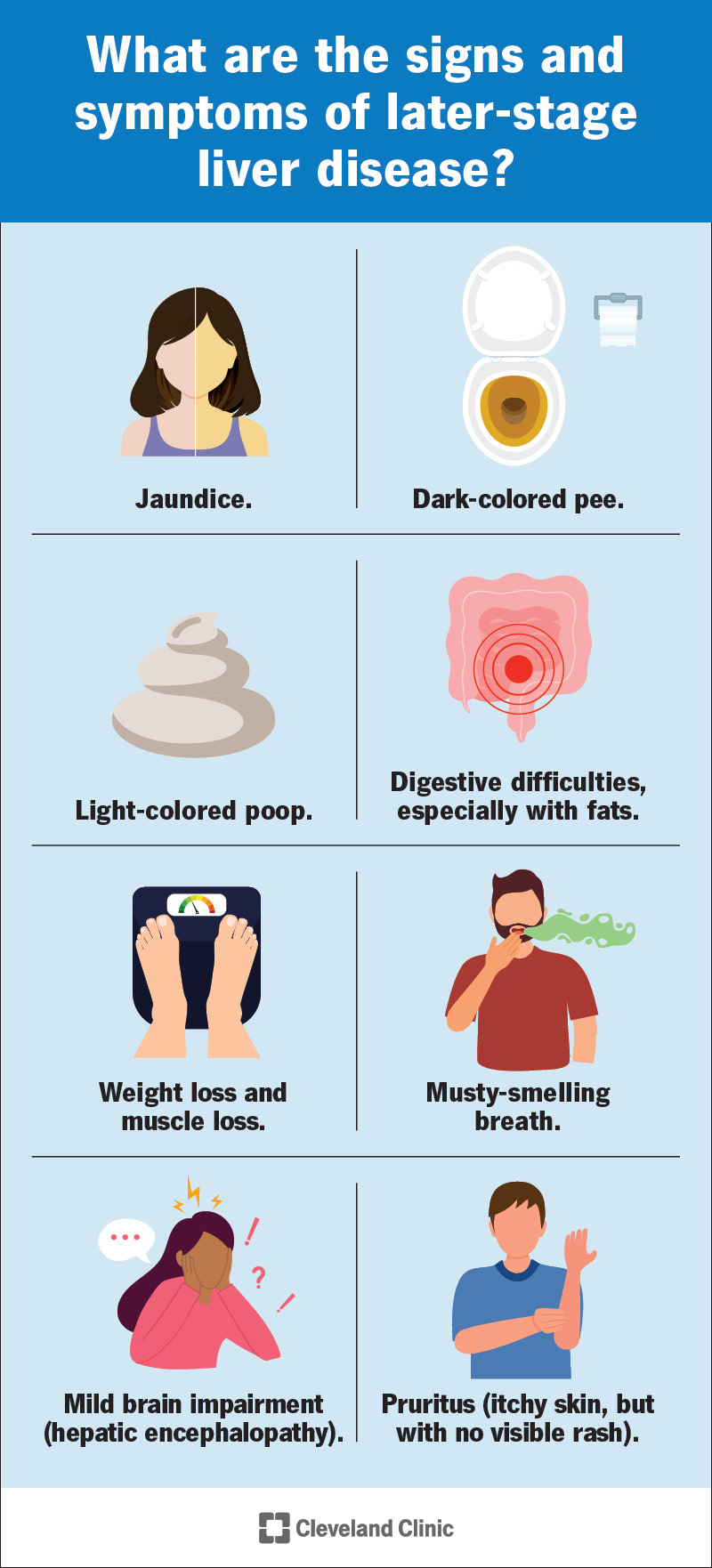
Liver disease symptoms
Liver disease doesn’t always cause symptoms in its early stages. Advanced, later-stage signs of liver disease may include:
- Yellowing of your skin or the whites of your eyes (jaundice)
- Dark-coloured pee
- Light-coloured poop
- Digestive difficulties, especially with fats
- Weight loss and muscle loss
- Musty-smelling breath
- Mild brain impairment (hepatic encephalopathy)
- Pruritus (itchy skin, but with no visible rash)
- Fatigue (feeling extremely tired)
- Nausea or loss of appetite
What causes liver disease?
There are many types of liver disease. Each type has its own causes. Some of the most common causes include:
- Steatotic (fatty) liver disease, including MASLD and MASH
- Alcohol-associated liver disease (ALD)
- Viral infections, including hepatitis A, B and C
- Autoimmune conditions, like primary biliary cholangitis
- Primary sclerosing cholangitis
- Inherited metabolic disorders, like glycogen storage disease and Wilson disease
- Toxic hepatitis
- Liver cancer and bile duct cancer
Risk factors
You may be more likely to develop liver disease if you:
- Have obesity or Type 2 diabetes
- Drink alcohol regularly or heavily
- Have a history of hepatitis
- Take certain medications long term
- Have a biological family history of liver disease
Complications of this condition
If liver disease gets worse, it can lead to:
- Cholestasis
- Jaundice
- Fluid build-up in your belly (ascites)
- Hepatorenal syndrome
- Liver cysts
- Noncancerous (benign) or cancerous liver tumours
Diagnosis and Tests
How doctors diagnose this condition
When diagnosing liver disease, your healthcare provider will use several tools. They’ll perform a physical exam and ask you about your symptoms and health history. They may also ask about your eating and drinking habits, as well as the amount of physical activity you get.
They’ll use lab tests and imaging scans as well. These may include:
- Blood tests to check liver function
- Imaging tests, like CT scan, elastography, MRI and ultrasound
- Liver biopsy (a small tissue sample)
These tests help your provider figure out the type of liver disease and how advanced it is.
Management and Treatment
How is it treated?
Treatment for liver disease depends on the cause and stage. In earlier stages, you may be able to treat and possibly reverse liver disease by making changes to your daily habits. This may include:
- Choosing nutritious foods
- Getting regular physical activity
- Reaching and maintaining a healthy weight for you
- Quitting alcohol
In the later stages, liver disease treatment may include:
- Taking medications to reduce symptoms
- Managing complications
- Getting a liver transplant
Recovery time
Recovery depends on the type of liver disease you have and how your provider treats it. Mild liver damage may improve within weeks to months. More advanced or chronic liver disease may require lifelong care.
When should I see my healthcare provider?
Contact a provider if you notice:
- Yellowing of your skin or the whites of your eyes
- Ongoing fatigue or weakness
- Swelling in your belly or legs
- Unexplained weight loss
Outlook / Prognosis
Is liver disease curable?
Some liver diseases are curable. You can manage others for many years with the right care.
In some cases, early treatment can reverse liver damage. But once severe scarring (cirrhosis) develops, the damage is usually permanent.
The most important step is to find liver disease early and follow your treatment plan. That can help protect your liver and improve your long-term health.
A note from Cleveland Clinic
Your liver does a lot to keep your body running. So, it’s important to pay attention to any changes in your body and take them seriously. Many liver diseases develop slowly, giving you a chance to catch them early. With the right care, you may be able to slow or stop damage. Even with chronic liver disease, treatment can help you manage symptoms and stay well. Small steps can have a lasting impact on your health.
https://my.clevelandclinic.org/health/diseases/17179-liver-disease

No comments:
Post a Comment